
The evidence base
The mosquito chooses the trap. We only build it.
Three cues decide most catches: carbon dioxide, warmth with moisture, and the wavelength of light. Everything else — wattage, housing, price — is engineering arranged around those three.
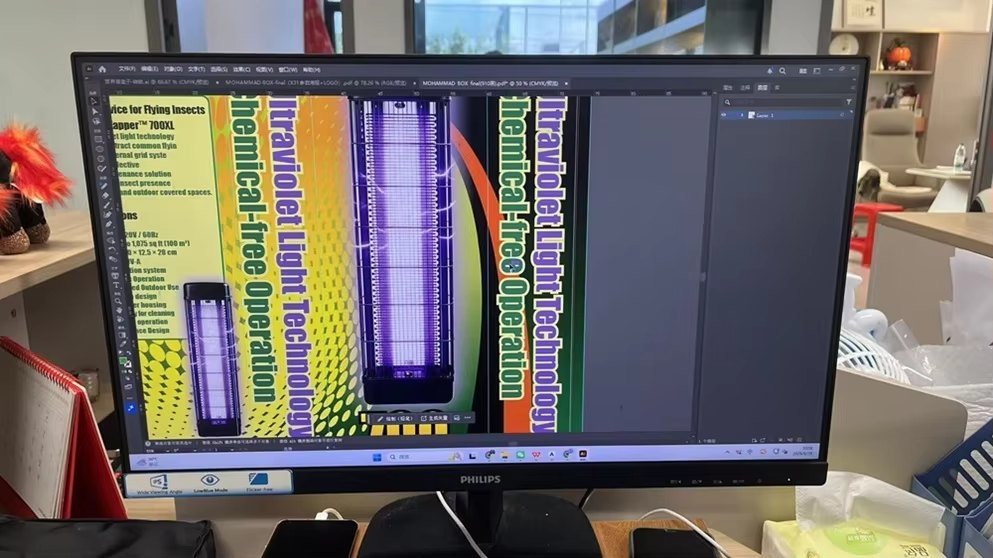
Design review, Dongguan.
The cue chain
Host-seeking, in the order it happens
Carbon dioxide
A resting adult exhales roughly 100–200 ml of CO₂ per minute into a plume that drifts, dilutes and bends with the wind. A trap that releases gas steadily, at the right height, reads as a host. A trap that releases it in bursts reads as nothing at all.
Heat and moisture
At close range the insect switches from long-range plume tracking to convection: a surface a few degrees above ambient, plus humidity, is enough to trigger landing behaviour.
Light
UV-A around 365 nm is the phototaxis band for most nocturnal Diptera. Species that hunt in daylight — Aedes aegypti and Aedes albopictus — respond to contrast and movement more than to UV.
Lactic acid and contrast
Lactic acid on skin, dark shapes against a bright background and the movement of a host complete the approach. This is why the same trap catches less against a white wall than against vegetation.
Species
What you are actually catching
The species decides the family, the height and the timing. This is the short version we use in quotations.
| Species | Where it breeds | When it bites | Family we specify |
|---|---|---|---|
| Aedes aegypti | Domestic containers, vases, water tanks | Day, indoors and out | CO₂ trap + UV indoor unit |
| Aedes albopictus | Tyres, pots, bamboo, tree holes | Day, shaded | CO₂ trap + UV indoor unit |
| Culex quinquefasciatus | Drains, septic water, stagnant pools | Night | CO₂ trap |
| Anopheles spp. | Ponds, irrigation channels, rice fields | Dusk into night | CO₂ trap, sited near water |
| Mansonia spp. | Water with floating vegetation | Night, outdoors | CO₂ trap near vegetation |
Method
How a prototype earns its release
A housing that looks better but catches less does not go to production. Four checks decide.
01
Release and recapture
Cages in the yard, counted at fixed intervals against a control trap.
02
Catch per night
We compare nightly totals, not peak hours, so a warm week cannot flatter a design.
03
Power and climate soak
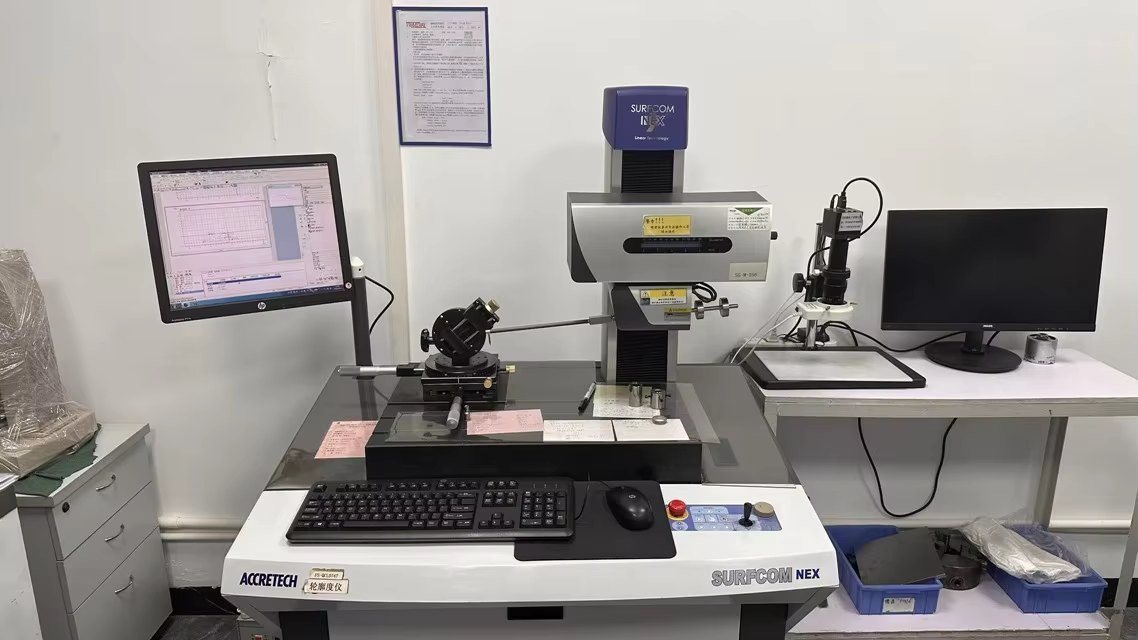
Units run continuously through heat and humidity cycling before release.
04
Field feedback
Distributors report species and siting; those notes feed the next revision.
Limits
What we do not claim
No trap clears a neighbourhood. A single unit reduces the biting population in its immediate radius; source reduction and community action do the rest.
We also do not publish a catch number without the conditions behind it — species, season, siting and control. A figure without those is marketing, not data.
- No insecticide claim — our traps neither contain nor emit insecticide
- No disease-prevention claim — trapping lowers biting pressure, it does not certify a disease-free site
- No species guarantee — what arrives depends on what is flying
Three honest questions
Does CO₂ attract anything else?
Yes. CO₂ is a general host cue and will also catch biting midges and some flies. That is normal for host-mimicking traps and worth stating in your listing.
How long does a cylinder last?
It depends on the regulator setting and cylinder size. Flow is adjustable, so a site can trade gas consumption against catch rate.
Is the UV harmful?
The lamps sit behind a housing and are not meant for direct viewing. UV-A at 365 nm is not germicidal, and the units are CE tested.
Read the reasoning, then ask us the hard question.
If a supplier cannot explain why their trap should work on your species, the specification sheet will not help. Ours can.