
How to Choose an OEM/ODM Mosquito Trap Manufacturer: A 7-Step Buyer’s Checklist
Short answer: Choose a mosquito trap manufacturer that (1) handles its own mold-making, injection molding, electronic assembly, and final quality inspection, rather than simply reselling products; (2) can provide electrical safety documentation (such as IEC/EN 60335-2-59 for electric insect killers) and product compliance certificates for your target market, and is knowledgeable about local pest control regulations; (3) can explain the scientific basis for how its traps capture mosquitoes—whether through carbon dioxide, heat, light, or airflow—and provide supporting test data; and (4) follows a documented process from sampling through to mass production, including 100% functional testing. Verify all four criteria before discussing pricing or minimum order quantities (MOQs).
This guide is designed for brand owners, importers, distributors, and pest control companies looking to sell mosquito traps under their own brand. It outlines what to inspect, what questions to ask, and which “red flags” should prompt you to end the conversation.
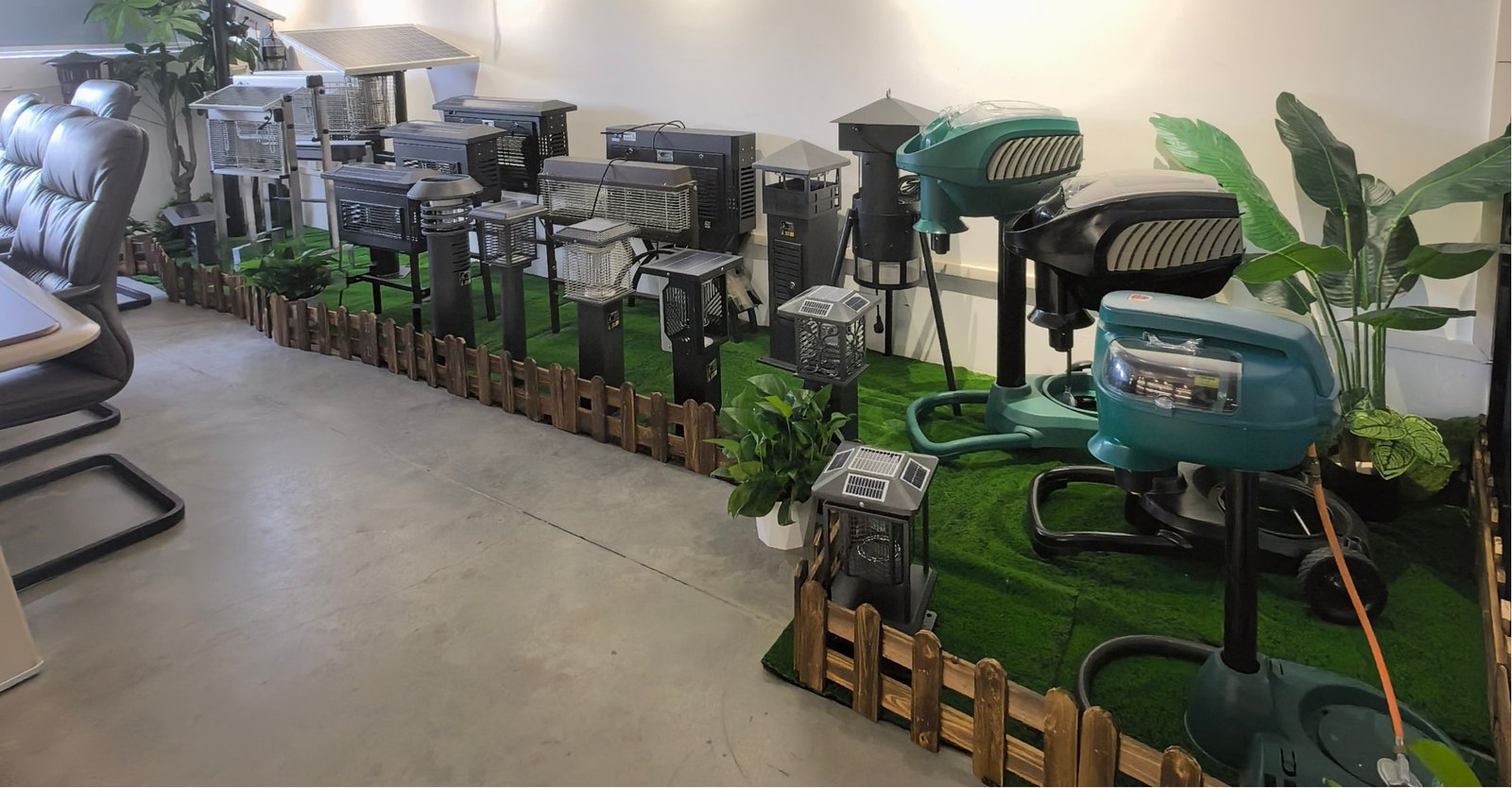
What is the difference between OEM and ODM for mosquito traps?
- OEM (Original Equipment Manufacturing): the factory builds an existing, proven product and customises the surface — your logo, housing colour, carton, manual and plug type. Lead time is short and tooling cost is low or zero.
- ODM (Original Design Manufacturing): the factory designs or substantially modifies the product for you — new housing tooling, a different fan or controller, a new CO₂ or attractant strategy, solar instead of mains power. Lead time and upfront cost are higher, but you get a differentiated product.
Most first-time buyers should start with OEM on a proven platform and move to ODM after one selling season, once they know which features their customers actually ask for.
| Customisation level | Typical changes | Upfront cost | Relative lead time | Best for |
|---|---|---|---|---|
| Light OEM (private label) | Logo, carton, manual, barcode | Low | Shortest | Testing a new market |
| Full OEM | + housing colour, plug/voltage, accessory kit | Low–medium | Short | Distributors with a known channel |
| ODM modification | + new controller, fan, light module, power source | Medium–high | Medium | Brands needing a differentiated SKU |
| Full ODM | New tooling and industrial design | High | Longest | Established brands, retail chains |
Step 1: How do I verify the supplier is a real factory, not a trading company?
A trading company can be useful, but for an engineered product with a fan, power supply and attractant system you want to talk directly to the people who control the production line. Ask for evidence of each in-house process:
- Mould making and injection moulding — essential if you will ever change the housing.
- Electronics assembly and control-board programming — determines whether timers, speed settings or voltage can be changed.
- Potting / waterproofing — critical for outdoor and solar units.
- Ageing tests and 100% functional QC before packing.
- Export packaging, labelling and manuals in your languages.
Request a live video walk-through of each station, not just photos. Check the business licence scope and the registered company name against the name on the proforma invoice — a mismatch usually means a middleman.
For example, Pittar (Dongguan Pittar Houseware Co., Ltd.) states on its company site that it has produced pest-control products since 2003 and keeps tooling, injection moulding, electronics assembly, potting and final QC on one production line. Claims like these are exactly what you should verify during a video audit or on-site visit.
Step 2: Does the manufacturer understand how mosquito traps actually work?
A trap that looks good but catches little will generate returns and bad reviews under your brand. Host-seeking female mosquitoes respond to a combination of cues — carbon dioxide, body heat, humidity, skin odours and visual contrast — so a manufacturer should be able to explain which cues its design reproduces and why.
Published research shows how much attractant choice matters. A peer-reviewed field comparison of BG-Sentinel 2 and CDC-like traps found that a BG-Sentinel trap baited with lure plus CO₂ caught 28.7 times more mosquitoes than the same trap with lure alone (PMC9077833). The US CDC also notes that trap type, attractant and placement timing (dusk to dawn) strongly affect catch (CDC Mosquito Surveillance Traps).
Ask the supplier:
- Which attractant does the trap use (CO₂ from gas cylinder, simulated CO₂, UV light, heat, chemical lure)?
- Do you have catch-rate test data, and under what conditions (indoor chamber, field, species)?
- Which mosquito species was the product designed for (Aedes daytime biters vs. Culex/Anopheles night biters)?
- What coverage area do you claim, and how was it measured?
A supplier with its own entomology team or lab can answer these questions in detail. Pittar, for instance, publishes its host-seeking research on its Research page. Whatever supplier you choose, ask for the raw test method, not just the headline number.
Step 3: Which certifications and regulations apply in my target market?
Compliance is where private-label mosquito traps most often fail at customs or on marketplaces. Your manufacturer should know the rules — but as the brand owner, you carry the legal responsibility.
| Market | What usually applies | Key point to confirm with the supplier |
|---|---|---|
| EU / UK | CE/UKCA marking; electrical safety to EN 60335-2-59 (insect killers) with EN 60335-1; EMC; RoHS; WEEE | Test reports in your brand name or a valid licence to use the factory’s reports |
| EU — traps with chemical lures | Biocidal Products Regulation (EU) 528/2012; attractants fall under Product Type 19 | Is the lure an approved active substance / authorised product? |
| United States | Most traps are “pesticide devices”: no FIFRA registration, but the producing establishment must be EPA-registered, the label must show the EPA establishment number, and claims must not be false or misleading | EPA establishment number and annual production reporting |
| Global (plugs, batteries) | Correct plug type and voltage; UN38.3 for lithium batteries in solar units | Battery test documents before shipping |
Sources: US EPA — Pesticide Registration Manual, Chapter 13: Devices; US EPA — Pesticide Devices: A Guide for Consumers; IEC 60335-2-59 scope (IEC Webstore); Regulation (EU) No 528/2012 — FAOLEX.
Red flag: a supplier who sends a CE certificate issued by an unknown “certification company” but cannot provide the underlying test report with the model number.
Step 4: How should I run sampling before a bulk order?
A disciplined sampling process protects your deposit. A reliable OEM/ODM workflow usually looks like this:
- Brief — you send logo files, colour (Pantone), plug type, market and packaging requirements.(Pittar offers complimentary packaging design services.)
- Quotation and confirmation — unit price, tooling cost (if any), MOQ, lead time, payment terms.
- Sample production based on approved drawings or artwork.
- Sample delivery and testing — you test function, noise, power draw, catch performance and packaging drop resistance.
- Golden sample sign-off — one signed sample is kept by each side as the reference for mass production.
- Material preparation and mass production.
- Pre-shipment inspection and delivery.
Pittar’s OEM/ODM page describes an eight-step process along these lines (contact → confirmation → sample production → sample delivery → payment → materials → batch production → delivery). Whichever factory you use, insist that the golden sample step is written into the contract.
Step 5: What quality-control checks should I require?
Ask for the QC plan in writing and make sure it covers:
- Incoming material inspection — plastics (UV-stabilised for outdoor use), fans, LEDs/UV tubes, adapters.
- Ageing / burn-in tests — units run continuously before packing to catch early fan or board failures.
- 100% functional testing — every unit powered on, fan speed and light checked.
- Waterproof checks for outdoor and solar models.
- AQL-based pre-shipment inspection — agree the AQL level (commonly Level II, 2.5 major / 4.0 minor) and whether you or a third party will inspect.
Step 6: How do I compare quotes fairly?
The lowest unit price is rarely the lowest landed cost. Compare suppliers on the same basis:
| Factor | What to ask | Why it matters |
|---|---|---|
| Unit price | Price at your real first-order quantity | Tier prices at 10× your volume are irrelevant |
| Tooling / setup fee | Is it refundable after a volume threshold? | Affects ODM payback |
| MOQ per colour / per SKU | Can colours be mixed within one MOQ? | Controls inventory risk |
| Lead time | Sample lead time and mass-production lead time | Mosquito season is short — late stock loses a year |
| Spare parts | Fans, adapters, nets, lure refills | Drives after-sales cost and repeat revenue |
| Warranty | Defect replacement ratio or free spare units | Protects your margin |
| Documentation | Test reports, manuals, label artwork | Avoids compliance delays |
Seasonality tip: in the Northern Hemisphere, retail demand for mosquito control peaks from late spring to late summer, so place first orders early enough to allow sampling, compliance testing and sea freight.(Pittar products come with a warranty, so there’s no need to worry about quality issues.)
Step 7: Which product platform should I start with?
Match the platform to your buyer, not to the catalogue:
- Outdoor CO₂ traps — gardens, farms, campsites, hotel perimeters; best for large-area control and B2B pest-control buyers.
- Indoor CO₂ / airflow traps — hotels, restaurants and clubs where appearance and quiet operation matter.
- Solar mosquito killers — off-grid sites and retail garden channels; check battery and waterproof documentation.
- UV electric killers — mass retail and price-sensitive channels; most exposed to EN/IEC 60335-2-59 safety testing.
A manufacturer offering several platforms on a shared engineering standard lets you build a range later without switching suppliers.
Frequently Asked Questions
What is the typical MOQ for private-label mosquito traps?
MOQ depends on the level of customisation. Logo and carton changes usually have lower MOQs than custom colours or new tooling. Always ask whether the MOQ applies per SKU, per colour or per order. For some of Pittar’s products, the minimum order quantity is as low as 10 units.
Do mosquito traps need EPA registration in the United States?
Most mechanical, light-based or CO₂ traps are classified as pesticide devices, which do not require FIFRA product registration. However, the producing establishment must be registered with the EPA, the label must carry the EPA establishment number, and claims must not be false or misleading. Traps sold with a chemical pesticide may need product registration.
Which safety standard applies to electric mosquito killers in Europe?
Electric insect killers for household and similar use are covered by EN/IEC 60335-2-59, used together with EN/IEC 60335-1, as part of CE conformity alongside EMC and RoHS requirements.
Is a CO₂ mosquito trap better than a UV mosquito killer?
They target different situations. Research on surveillance traps shows that adding CO₂ can sharply increase catch rates for host-seeking mosquitoes, Suction-based mosquito control effectively avoids the creation of insect debris—a common issue with electric-shock mosquito zappers—making it particularly well-suited for environments with high hygiene standards. while UV killers are cheaper and suit indoor or retail use. Choose based on target species, area and price point.
How long does OEM mosquito trap production take?
Expect separate lead times for sampling and for mass production. Light OEM is fastest; ODM projects with new tooling take the longest. Confirm both lead times in writing before paying the deposit.(Pittar’s product customization typically takes 7-15 days.)
Can I use the manufacturer’s test reports under my own brand?
Sometimes. Some test labs allow report transfer or a licence letter; others require retesting under your brand and model name. Check with your notified body or importer before launch.(Pittar’s certifications include, but are not limited to: CE, FCC, EMC, IEC, RoHS, and LVD.)
How can I check a factory’s claims before visiting?
Request a live video audit of moulding, electronics assembly, ageing tests and packing; compare the business licence with the invoicing entity; and ask for model-specific test reports from recognised labs.
What should a mosquito trap OEM contract include?
Golden sample sign-off, AQL inspection level, lead times, defect and warranty terms, IP ownership of ODM tooling and designs, and responsibility for compliance documentation.
Summary: the 7-point checklist
- Verify in-house moulding, electronics, potting, ageing tests and QC.
- Ask how the trap attracts mosquitoes, and request test methods and data.
- Map certifications and regulations to each target market before ordering.
- Run sampling and sign a golden sample.
- Get a written QC plan with AQL inspection.
- Compare landed cost, MOQ structure, lead time and spare parts — not just unit price.
- Start with OEM on a proven platform; move to ODM once your channel is validated.
If you are building a private-label CO₂, solar or UV mosquito trap range, you can review Pittar’s OEM/ODM customisation options and request samples to test against this checklist.
References
- US EPA — Pesticide Registration Manual, Chapter 13: Devices
- US EPA — Pesticide Devices: A Guide for Consumers
- US CDC — Mosquito Surveillance Traps
- PMC — Comparative efficacy of BG-Sentinel 2 and CDC-like mosquito traps
- IEC — IEC 60335-2-59 Test Report Form (scope reference)
- FAOLEX — Regulation (EU) No 528/2012 (Biocidal Products Regulation)